Tuesday, 24 April 2012

Are you set for the big Kick off?


As you will know the European Championships is fast approaching (8th June - 4th July)

WIth games being played at either 5pm or 7.45pm it is the perfect opportunity to drive the after work trade to your venue.

The key dates are the 11th, 15th and 19th of June when the 3 Lions are playing (and hopfully a few more dates after that!)

CFL Marketing can help you build a custom promotion, to bring the crowds in.

Whether its in game promotions, supporters club discounts, WAG parties, or themed parties and events we have it covered.

Call us on 01225 782669 or log onto www.cflmarketing.co.uk/offers to request a sample pack

Please see below some ideas -


Wednesday, 21 March 2012

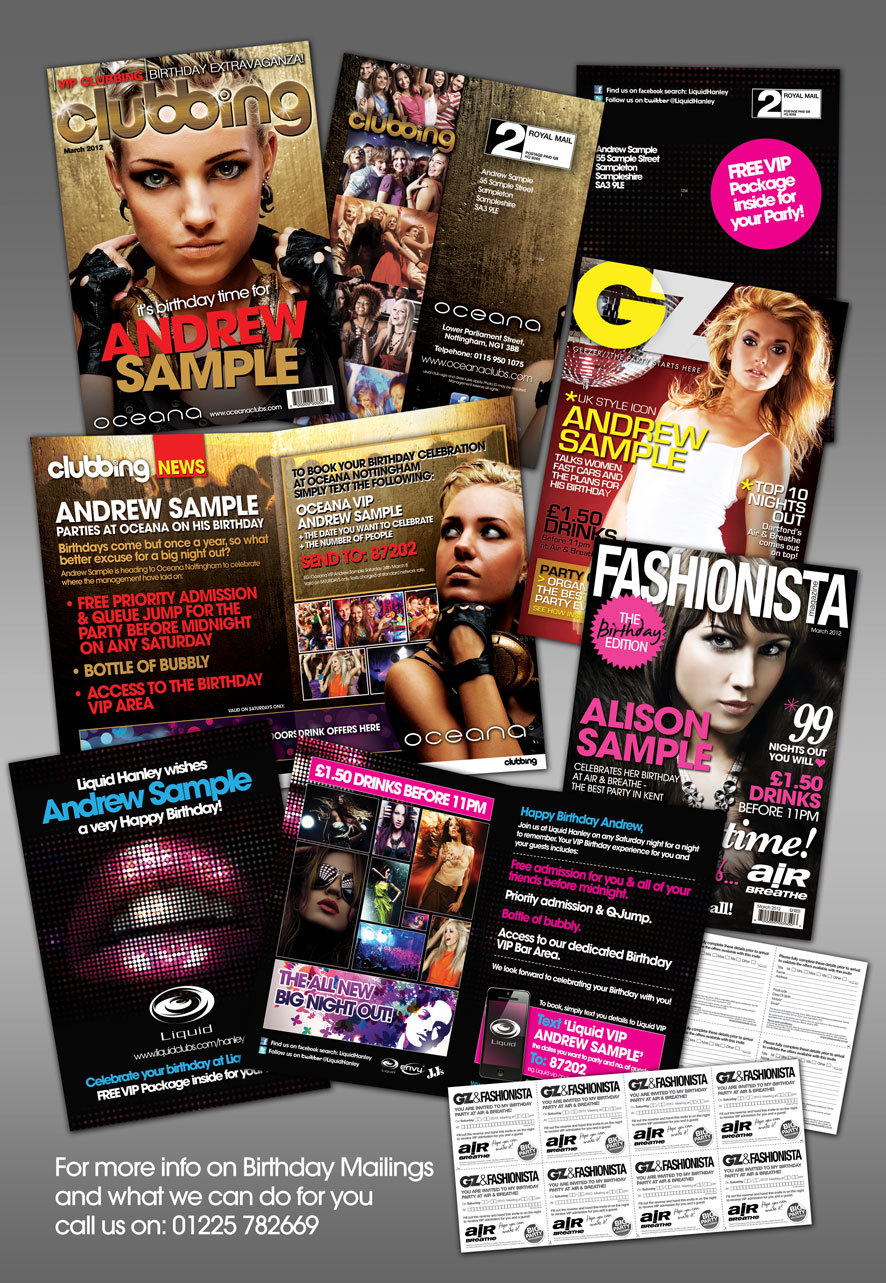
The single most effective way to drive party bookings into your venue...FACT!

Thirty years ago when disco was in it’s prime I started a promotion which years later became a must have weekly campaign in every nightclub in the UK.

It became known as the birthday mailer and this is how it works.

We have in our extensive database the date of birth of every young person in the UK aged between 18-30.

A fully personalised digital mailer is sent three weeks before the young person’s birthday inviting them to a free night out with up to twelve of their friends.

In addition other offers such as free drinks, queue jump are essential to get maximum returns.

In the age of Facebook, Twitter and the like it’s a promotion, which the younger generation of nightclub managers haven’t used or seen the success that a good birthday mailing can bring.

Even today there are well known night-clubs who rely on the footfall that the mailings can bring in, a well known Midlands night-club is getting returns of over 200 people a week at a cost of £70.

Depending on your spend per head that can mean an extra weekly income of up to £800.

A recent addition is the use of text response, the customer is invited to text the size of the party they are bringing, when they do this you will have captured their mobile number*

This is the opportunity for the night-club to upsell the night with extra incentives.

We have a great range of designs for the mailers, go to www.cflmarketing.co.uk to see some examples, phone Bruce, Mike or Phil on 01225 782669 for sample packs which we can post to you.

Give this promotion a try, as an incentive we will not commit you to anymore than four weeks mailers, with a minimum of 100 packs per weeks.

In the current economic climate it is difficult to get people out but for sure they will go out on their BIRTHDAY.

And this is something the social networking sites cannot do, and that is putting a well designed birthday card in their hands, with their name on it, arriving in the post.

Kindest Regards

Bruce Bronson

* Ask about our media console for text transmission.

Our birthday mailing examples below.

Thursday, 8 March 2012

How to Set and Track Your Marketing Budget

Setting a marketing budget for your business is one of the most critical factors in your success. Although most businesses would love to spread their influence and message as much as possible, time and money limits can keep them from doing so.

Setting a specific budget for your marketing activities has a number of benefits. It will help you steadily grow your business without overtaxing your resources or your staff. It will help you build a consistent marketing plan that will grow your list of prospects. It will also help you keep your spending in check. You are less likely to jump on the next big thing if you have already created your marketing budget and know how much you will be spending on a particular set of activities.

Finding Your Sweet Spot
In order to set a marketing budget that works for your business, you need to spend time crunching the numbers. The general rule of thumb is that your marketing budget should be between 1 and 10 percent of your total sales. However, this can vary depending on several different factors. If you are a brand new business, you should probably spend more in order to get more exposure.

Look at your total sales for last year and then look at what a budget of 1 to 10 percent would look like. Pick a range that makes the most sense to your business and your industry.

Spending Your Budget Wisely
Once you have created a number to work with, it is time to determine where that money will be allocated. There are many different choices. With the rise of web marketing, the choices have become even more diverse.

Traditional marketing and advertising costs can include:
•Print

•Radio/Television

•Direct Mail

•Trade show booths

Web marketing options are:
•Email Marketing

•LinkedIN

•Twitter

•Facebook

•Content Marketing

How you determine where to spend funds over these categories?

It can be helpful to look back to the previous year and determine which channels produced the most results. If you are expanding to incorporate a new channel – like email marketing – look to the best practices of the industry and expected ROI figures in order to determine if it will be a good move for your business.

As you spend your marketing budget, be sure to leave some room for the unexpected. Keep in mind that training for your team and others, hiring experts for specific projects and website improvements should all fall under your marketing budget.

Tracking Your Spending
No matter how you decide to spend your resources, it is important to keep track of your spending. Be very mindful of where your new clients are coming from. If you are using a newsletter or ebook on your website to track leads, be sure to ask how the website visitor found you on the opt in form. Have your sales people and customer service representatives ask clients how they discovered your company.

Then compare your leads to your marketing efforts and see what is giving you the best results. If you find that your email marketing newsletter is bringing in more leads than your print ad, allocate your print budget to marketing your newsletter. By tracking your results and fine tuning your budget as you go along, you can make the next business year a profitable one.

Wednesday, 29 February 2012

5 Steps to Cleaning Up Your List

Cleaning up your e-mail marketing list is a task that needs to be looked after at regular intervals. Taking the time to ensure that is up to date means that you will be communicating with prospects who are interested in hearing from you and are motivated to become buyers instead of browsers.

1. Identify Typos in E-mail Addresses
One thing you will want to avoid in your prospect list is having too many “unknown user” messages bouncing back to you, since this can lead to your account being blacklisted. To avoid this issue, you will want to make sure that obvious spelling errors are corrected in the e-mail addresses you have collected.

2. Find Duplicate E-mails on the Subscriber List
To ensure that your subscribers are not receiving multiple copies of the same message, ensure that you do not have any duplicate e-mail addresses on your list. Sort your list of database by e-mail. If you see more than one e-mail for the same person or company, remove them.

3. Remove Distribution E-mail Addresses
Make a point of removing any e-mail addresses which have the word “spam” in them. You also want to take e-mail addresses listed as “sales@” or “postmaster@” off your list. These distribution e-mail addresses are rarely used by companies and are often given just to grab a freebie or other incentive.

4. Ask List Members to Confirm their Interest
To make sure that your messages are reaching interested prospects, send out a message to everyone on your list asking them to reconfirm they would like to remain on your list. Be sure to thank everyone for their initial interest in participating; everyone likes to feel appreciated.

5. Make it Easy for Subscribers to Opt Out of Your List
When you are cleaning up your list, make sure that your members understand very clearly what they need to do to either confirm their continued interest or to have their names removed from it. Make it easy by offering a simple Yes or No choice, and tell your scribe subscribers exactly what you want them to do.

Use simple phrases like “Click Here to Stay on the List” or “Please Update My Subscription” for list members who want to continue to receive your messages. Clicking on the link should immediately take them to a page where they can see the information which is been uploaded to your list. At that point, all they would need to do is confirm that it is correct or make any necessary changes and then hit the “Submit” button.

Someone who indicates that he or she would like to unsubscribe from the list should also be taken to a page confirming that the request has been received. The message should also indicate when the subscriber can expect his or her name to be removed. If it will take 24-48 hours (or longer), indicating this to the subscriber means you will not be accused of spamming someone who specifically asked to be removed.

By taking these 5 steps to cleaning up your list, you will find that your e-mail marketing efforts are being used more effectively. You will be able to reach subscribers will find your messages interesting and relevant to their needs.

Friday, 17 February 2012

Three Ways to Improve Deliverability with Your Content

Getting your messages through to your list members is just as important as building your list. Deliverability is affected by a number of different factors – from the reputation of your email marketing provider to the quality of the email addresses on your list. Another important piece of the puzzle is the content of your email messages. By paying attention to specific sections of your email marketing messages with regards to content, you can boost your deliverability rates and see better results from email marketing.

Here are the three key content areas that you need to focus on with regards to deliverability:

1. Subject lines
Subject lines are the first exposure that your audience gets to your message and they can significantly improve your deliverability rates. People are busy and no matter how excited they might have been to receive your information when they first signed up, they will resist opening your emails without a compelling subject lines. Subject lines should provide a teaser for the content inside of the email and encourage the recipient to open up the message.

Subject lines are also evaluated significantly in terms of the spam content of a message. Having the right subject line can help you avoid spam filters and be sure that you’re actually reaching your intended audience.

2. Newsletter content
Deliverability rates are affected by your previous open rates. This means that the more that your messages are sent out and opened, the more trustworthy you are seen as a sender and the more likely your messages will be delivered and opened in the future. You can effect this directly with your newsletter content.

Focus on sending your list members helpful, targeted information in pre-set intervals. Your sales messages should be spaced out with helpful content in between. This will help your list members see you as a valuable resource rather just a company that is focused on the sale. By planning out targeted content that answers major questions for your audience, you can see an increase in your open rates and a boost to your overall deliverability rate.

3. List segmentation and targeted content
Besides sending helpful, informative messages and newsletters at regular times, you can go a step further with your targeting and improve your deliverability rates with list segmentation. If you know that certain members of your list are more likely to open and read messages, you can segment these members and send messages to them regularly. You can also segment your list by buying behavior, click-throughs and a number of other factors. Using segmentation you can get ultra-specific with your list and see a better result from your email marketing efforts.

Deliverability rate is an important metric that deserves your attention if you want to excel with email marketing. There are many ways that the quality and nature of your content can affect this metric. Just like with other forms of online marketing, understanding what your customers want to know and delivering it to them in a helpful and targeted way is a key to deliverability and overall email marketing success.

For More information on CFL HTML Email services please call 01225 782669 or or log on to www.cflmarketing.co.uk

Thursday, 16 February 2012

How to Determine Where to Spend Your Marketing Budget

Establishing a marketing budget is only the first step in making sure your business is marketed effectively. Once you know how much you have to work with, it is important to make wise choices about where that money will be spent.

By considering a few key criteria, focusing on your most pressing marketing needs and evaluating what worked best in the past, you can determine where to best spend your marketing budget.

Marketing is changing and smart companies are keeping up with these changes. With web marketing, it’s become possible to reach more customers than ever before, but you need to keep a few important principles in mind when you are looking for marketing activities.

As you look at the next year of spending, keep the following four criteria in mind:

1) Trust
Which marketing methods and practice will help build trust in your company?

2) Targeting
Do the marketing methods give you the ability to approach a small segment of your audience?

3) Engagement
Are your marketing methods getting you in front of active enthusiasts of your product or service?

4) Social sharing
Do these marketing methods make it easy for your audience to spread and share your content to their social contacts?

With these criteria at the forefront of your decision making process, you need to look at where you are going to get the most bang for your marketing buck. What are your main goals for the next month, the next quarter and the next year? Which practices are going to help you meet those goals? Marketing activities and methods can help you meet a number of different goals but some are better than others for specific goals.

Here are five few possible ideas:

1) Increasing website traffic and conversions:
Web re-design, copywriting, SEO and PPC advertising.

2) Increasing sales:
Targeted email marketing messages, sales pages and web design.

3) Building a community and increasing your reputation with that community:
Email marketing, social media and community management.

4) Increasing exposure:
Trade shows, press releases, white papers, email newsletters and guest blog posting.

5) Boosting credibility:
Regular email newsletters, authority blog posts, press releases and white papers.

Your marketing spending should reflect your goals. Looking at your most immediate goals for your business will help you identify which marketing activities you should invest in. Give priority to those tactics that will help your reach your goals in the next few months.

Finally, you need to look at your past performance before you invest in marketing for the new year. Which marketing activities had the biggest ROI for your company in the past 12 months? Which efforts were disappointing at best or complete failures at worst? Just because a technique or method is an industry standard or works well for another company does not mean it is a good fit for you. Always rely on your company’s experience with a marketing method to make your final decision.

With these criteria, goals and experiences in mind, you can spend your marketing budget wisely and effectively.


However you decide to spend your budget, CFL Marketing can advise you and help execute your plans – contact philm@cflmarketing.co.uk for more details or log onto www.cflmarketing.co.uk

Wednesday, 15 February 2012

3 Best Practice Rules for Email Timing

In a perfect world, your email marketing list members will open up each of your messages immediately, read each line and take action right away. But as you know, your list members are busy, may not recall why they signed up for your list in the first place or may be receiving your email at a time when there are dozens of other messages coming their way.

That is why it is important to time your email messages just right. Timing relates to two different decisions:

-What days and times are best for my email messages?
-How frequently should I send out my email messages
-When you understand the timing and frequency rhythms that are right for your list, you can send out messages that have more impact. Here are three best practices rules to follow to boost your success.

1.) Find a schedule and stick with it.
The most important key to having email marketing success with your own list is being consistent. Find a schedule that works for your company (and gets a good response from your list) and then repeat it week in and week out (or month in and month out). Of course, this does not apply to special discounts or deals, but with your email marketing newsletter you should have a consistent schedule. Weekly or bi-weekly works best for most companies.

2.) Consider your users and their lives.
Your email marketing messages are more likely to be opened when your audience is not overwhelmed with other messages or checking in quickly. If your target market is busy moms, sending them a message at 10 am is not going to work. If you are marketing to small business owners, messages on a Friday afternoon are not going to have an impact. Think through the day to day life of your prospects and then pick a time when they are most likely to have time to open and read your message. Once you have decided on a time and day for your newsletters and messages, then you can look at your open rates, track your effectiveness and make adjustments.

3.) Give list members the power to select their own frequency.
One of the best ways to succeed with email marketing is to make sure your users get exactly what they need when they want it. You can do just this by allowing your subscribers to tell you how often they’d like to be contacted. For example, if you are sending a weekly blog update newsletter and a monthly in depth newsletter, your subscribers can indicate whether they would like to be contacted each week or each month. You can use this information to segment your list and send content at the right times to specific email list members.

Although these are important industry best practices, each email marketing list is unique. Your subscribers will respond best to a specific frequency and timing of content. Once you select what you think will work best, look at your analytics and results and make adjustments as need be.